How Purpose-Driven Business Models Transform Communities and Drive Success
Shane Christopher, co-founder of My Home 4 Good and a real estate professional with over 20 years of experience, has revolutionized the traditional home closing process by integrating community giving into every transaction. Shane’s innovative approach takes a portion of his real estate commission and allows clients to choose the charity recipient, transforming what’s typically a purely transactional experience into something deeply meaningful. Since launching in 2018, this faith-driven initiative has donated nearly $300,000 to local charities while addressing a fundamental challenge many business leaders face: how to authentically integrate purpose into profitable operations without it feeling forced or promotional.
The My Home for Good model demonstrates key principles that any business leader can apply: authentic generosity builds stronger client relationships, involving customers in your mission creates deeper engagement, and purpose-driven initiatives often generate unexpected referrals and loyalty. Shane’s decision to structure donations through the closing process rather than as post-transaction tax deductions shows genuine commitment—the money goes directly to causes clients care about, sometimes even allowing clients to claim the tax benefits themselves. This approach has revealed powerful insights about human nature and business relationships, with many clients experiencing their first meaningful charitable giving, creating what Shane describes as “light bulb moments” that often inspire continued community involvement long after the transaction closes.
Business leaders seeking to integrate purpose into their operations should consider how their existing processes could incorporate community impact without compromising profitability or appearing opportunistic. The intersection of people and technology—COVI’s core focus—applies here as systems and processes can be designed to facilitate meaningful human connections and community investment. Shane’s success proves that purpose-driven business models don’t just benefit communities; they create competitive advantages through enhanced client relationships, organic referrals, and employee satisfaction. As research from organizations like Deloitte confirms, companies with authentic purpose-driven cultures see measurable improvements in hiring, retention, and financial performance, making community investment not just morally sound but strategically smart.
https://youtu.be/-jBBnLYYfRI?si=8Blgnu-a3VyLVwt0
Episode Summary:
Shane Christopher joins The Covi Way to share the story behind My Home 4 Good, a real estate initiative turning closings into opportunities for charitable giving. With nearly $300,000 donated so far, Shane’s model empowers clients to support causes they care about—bringing surprise, joy, and purpose to every transaction.
Key Quotes:
-
“We’re not just selling homes—we’re building a culture of giving.”
-
“Legacy isn’t about what you leave behind. It’s about who you lift up.”
-
“This isn’t marketing—it’s ministry. We give whether it’s seen or not.”
-
“You can make a big impact with small decisions.”
-
“It’s joy, not just generosity, that makes this sustainable.”
Connect with COVI:
Instagram | Facebook | Website | FREE IT Strategy Analysis
Links to The COVI Way Podcast
YouTube | Apple Podcasts | Spotify
Episode Transcript
The COVI Way - Episode 6
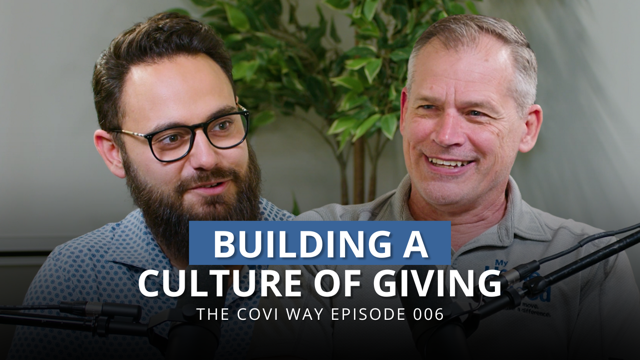
Featuring Dave Vint and Shane Christopher
Welcome to The COVI Way, the podcast where we break down the intersection between people and technology. Because IT shouldn’t just be about solving problems. It should be about enabling people to do their best work. Today, I’m sitting down with Shane Christopher, co-founder of My Home 4 Good, an organization that takes something as menial as a home closing and turns it into something that impacts local communities for the better.
Dave: Shane, welcome to the show. So excited to hear more about what y’all are doing and the amazing results you’ve had.
Shane: Happy to be here. So when you gave me a call about it, I was intrigued. So hopefully we can make a good show for you.
Dave: I’m sure you will. I’m sure you will. The stories and I mean, the results y’all have had. It’s awesome. So let’s just jump in from the beginning. Tell me about how did this idea come about?
Shane: So myself personally, I’ve been doing real estate for over 20 years. And I was always one that wanted to tithe back or give back from what I had. So I would just pick what I was going to give to based off of my commissions and things of that nature. So I had done that for years. And then Lee Smith, who also started My Home for Good with me, Lee came in and started doing real estate. So when he started doing it, he saw an opportunity or he saw somewhere something similar and he was kind of excited about it. And so he showed it to me, we looked at it and everything, we kind of tweaked it. And that’s what created My Home for Good. So the idea was that we would actually give at the time as opposed to, you know, do it on our own, pick and what it was. So we brought the client or the buyer seller into the process. So that would have been in, I think it was January, February of 18. Is when we started doing that.
Dave: Okay. So the idea here is, you’ve created a model where you’re continuing to grow a real estate business, but you are empowering your home sellers to actually choose a charity of their choice. Is that correct? Tell us more about that.
Shane: So the concept when we started it was what we would do is we would take a portion of our what would normally be our commission and then we would tell them our client, we’re going to get donated to a charity. We want you to pick the charity. So that’s how it all started. It puts them into the process. It allows them to think within their own mind about, who do I want to give to? And in some cases, they’d be like, I have no idea. And we would try to give them some ideas and throw some ideas at them. And they might pick from one of those, or they might come up with a totally new one. Other people had it specifically. The one I just closed, they’d been donating time to a food bank for years. So they’re moving out of the community and this was like their last gift to that food bank was being able to have that. That was a little over $1,000 went to this food bank. So yeah, it’s, you know, somewhere like that. Sometimes you’re holding the hand a little bit more with it, but overall, yeah, I mean, it’s been a great process.
Dave: So it’s incredibly cool. It’s incredibly generous of you, especially in light of the ups and downs of the real estate business or the last, it seems like every economic crisis always, at least the ones that I’ve lived through have always come back to housing. And so for you to take that bold move to say, no, a portion of my commissions, they’re always going to go to this. I think it’s so cool, but to do that and then take it a step further to say, yeah, but this isn’t just the mission that I’m excited about or the community impact that I’m excited about. It’s like you’ve said, I’m so passionate about this. I want you to be the one to choose. It’s absolutely incredible.
Shane: Oh, yeah. No, it’s for us. You know, there’s different processes that went with and how we do this and such. The idea of it, the concept of it was more of faith journey for us. So in our situation, we were going to give towards like a tithe or something anyway. But we didn’t want the money to come directly out of our, like after the fact type thing where we could claim it on our taxes and such. So we wanted it to be part of the transaction so that we couldn’t claim it on taxes. We weren’t taken any privilege with it. We wanted it to truly be, in fact, some cases the client can claim on their taxes depending on the situation. They talk to their accountant or their CPA or you know, whoever it is to verify what they can and can’t claim. And in a lot of cases, that’s how we’ve set it up to do that.
Dave: That’s awesome.
Shane: And the idea of it being more of a faith thing to us, you know, part of it was that is other people have passions. They have things they’re excited about. And why not let them give to that? Make that something and in some cases, like I said, they may not have something and it gives them time to really process and think about it, which is kind of cool.
Dave: So when you explain this program to a potential seller or a potential buyer, what kind of reactions do you get?
Shane: So a couple of different reactions. I mean, the primary reaction is really, you know, they just, it’s hard to believe. They don’t, we haven’t used it as like a tool to put out there in advertising and that was one of the things we didn’t want it out there. Like a big thing of advertising it to make that how we get clients. But usually setting it at a table, we might have the discussion. Sometimes we might wait until afterward, we’re listed and all those things and then you have the discussion. Oh, by the way, you know, so it just depends on the situation. But that was one of our things is we just didn’t want it to become, you know, this is the thing. This is why somebody goes with us. So try to remember the rest of your question there.
Dave: No, no, no, that’s no, it’s great. Tell me more about the reactions that they have. So you’ve told me a little bit about how sometimes it’s a complete surprise.
Shane: Sometimes it’s you get the gist. Yeah. Yeah. Yeah. So you got buyers and sellers. So back prior to the recent law changes in lawsuit in real estate that happened. Pretty much everything would be on the seller end. So the commission, everything would be shown on their side of the transaction. And so when we would offer this, we’d tell them about it. As a seller goes, they’re like, you know, part of the thing in their head is like, oh, well, this is coming out of what I’m paying you, you know, but at the same time, that’s why we wait on it, too, because we don’t want that to become a talking point, right? We’ll just charge me because the cost is the cost and this is just something we want to do. But on the buyer end, the reactions were always so much different because the buyers, they would be like, what? Because they weren’t putting skin in the game. They weren’t putting anything into this. They weren’t paying a commission at that time. So that was a big difference. It was like for them, it was just like, I can’t believe you do this. So you saw more of that on the buyer end than the seller end, although a lot of sellers were really happy with it and excited. But you saw more of the buyer back then.
Dave: So that’s amazing. It’s so cool. It’s so respectable that you would not run with this as your primary advertising strategy, but that you would. It’s a surprise and delight. It seems like a lot of the folks that you work with.
Shane: And in some cases we do. We would get clients from other clients and they’d be like, hey, they do this. You know, so sometimes that would become an unintentional advertisement. Right? An unintentional referral that came from it, which is fine, you know, but it wasn’t us trying to put that out as the lead, I guess. It was more of a, this is something we want to do.
Dave: That’s incredibly cool. And it sounds like the implication is because you felt it was the right thing to do. It was something that was necessary for you to do.
Shane: Oh yeah. Yeah. No, I mean, it was, the thing I’ll say is this is when you get to a closing point, you’ve gone through a lot of process. It could take a month, it could take longer, it just depends on the situation. Sometimes it’s quick. But everything’s been happening, all the negotiations and things, appraisals and inspections and everything that happens in the process, right? And you get to that closing and you’re sitting there and on that settlement statement, you can point to where it states the donation. And then when a check is handed to you for that place to donate. And sometimes you can just give it to your client to go hand to the place that is donated. Right. And it says right on the check and, and, you know, in reference to them, to their name. For me, I get more joy out of seeing that of giving that, then seeing our check or what we get, you know, everybody’s works. Everybody’s got to make money. So, but I get more joy out of seeing that because you see a lot of times like transition for people of giving back more themselves maybe in the future. Which is really cool.
Dave: So I’d love to explore that a little bit more and the impact it has on some of your clients, especially when this is a surprise when perhaps they haven’t invested in a local charity in their community that way before, or maybe this is something that’s new altogether. Do you have a story or an example of someone that this was new for and how it impacted them?
Shane: Yeah, I mean, there’s a few different types of ones. One I can think of is a local charity here for all things kingdom, for the kingdom. Yeah, I think that’s the wording. But they do a lot with homelessness and such. So that one’s kind of a cool one. We’ve done it various times. And they actually go down and serve the homeless. So it’s given opportunity for people to be familiar with that, to possibly go serve themselves at that point. So that’s kind of a neat one. Adoptions are another one that’s kind of neat. We’ve had times where, you know, a child is now getting adopted into a loving home because of the help of some of this. There was one client, they had a family member die of a disease. And for them, it wasn’t something they thought of before, but it created in them the realization of the need for more research and more funding for research. And that’s where the funds went. And for them, it had a more personal approach. So those are a few just concepts. And some are people who love animals given the Humane Society, you know, and those are kind of fun. I’ve always, I’ve always joked with them that, you know, they, they can use it to go buy a dog. That’s great or stuff like that. Well, I mean, it’s, it’s money going there. So that’s right. You’re fees, you know, that accounts. You’re, you’re kind of killing two birds with one stone there, right?
Dave: There you go. So there you go.
Shane: So, that’s, I think that’s the biggest thing is, and I think it lacks in. A lot of things in business and society today is just there being fun and joy in our process. And I think that’s one big thing we, Lee and I both particularly, we love to have it be a good experience as a whole. And this is just one part of that experience, right? Being able to get them in a position where they’re thinking about what to give to them, things of that nature. But that joy of knowing that money goes to that, you know. That’s just one of those pieces, right?
Dave: That really resonates with me because having been through a couple of home closings, they’re so tedious and transactional and painful to have a nugget or a surprise like that in there. At the risk of sounding cheesy, you’re taking something transactional and in some cases it’s becoming transformational to some of these individuals to unlock that experience of joy to be able to give in that way. And not only just to give in general, to make that, like for the buyer to experience that as their first investment in their new community of something that’s occurred. It’s incredible. It’s like getting back to an older form of local community, which is to say, the local community supports itself and invests in itself and those local businesses in those charities to look out for each other and help that community grow.
Shane: So that’s what you’ll see a lot, right? And I don’t, I mean, like I said, you’ve had the ones that serve for 30 years somewhere and that’s where they want to give to. But I mean, I’ve had, I know Lee’s had ones who had never really given before. They just, I mean, you could tell, you know. And they just, you know, for them, you talk about transformation there. I mean, it’s like a light bulb goes off. And it’s kind of cool in those situations. And it’s not trying to say that in a negative way, but it’s just kind of a cool thing that you get to be there for that process for someone, you know, where you hope it just continues to be a thing that goes forward, right? Because, you know, there’s only so much you can do. But if, but if you can empower someone to do better things, to do greater things and to think about it moving forward, then who knows what can happen down the road, right?
Dave: That’s right. You will never see the fruit. You will never see the beautiful things that happen, but that’s what makes it cool. Cause you don’t need to see it.
Shane: And sometimes we have so much pride. We have so many things that we want to be, you know, just like this. It’s like I tend to not for me to sit and talk about this. It is being careful because we all have a high propensity for pride, right? And it would be easy to be prideful about what’s happened and what’s happening with it. But the cooler thing is, is just that it happens. And yeah. So on that end of it, we try to be humble with it and just appreciate what gets to happen.
Dave: So it’s amazing. So if I was a seller, could I choose literally any charity to give to any 501 C3?
Shane: Any 501 C3? So this, I will say this is an interesting, just to let you know. I told you this was kind of a faith thing for us when we started it. And that was one of our conversations sitting down was, what if the charity is something that goes against our personal thoughts or beliefs? And for us, we said, then that’s where it goes. It’s, we trust whatever it is for us that God is in it, regardless of what it is. So it’s not our decision. It’s not our opinion. It’s, you know, what, what it’s supposed to go to. So yeah, if it’s a, if it’s a, as long as it’s a registered 501 C three, then, um, yeah, we’re fine with it. Now we’ve had ones joke with us cause they have one of their own. Oh, just put it in. They don’t, you know, get those funny. I just started a nonprofit. I just started a nonprofit. Just put it in there. Imagine that. But some had actually had nonprofits and stuff, but they, uh, they opted not to put it to that. But we could have technically, right?
Dave: Sure.
Shane: But I think for them, they’re just like, yeah, this is kind of weird if we just put it back into our, yeah. But yeah, so, you know.
Dave: Yeah, that’s amazing. So it’s amazing.
Shane: But that’s, you know, that was that was our heart. It was it was it was to really be there for people and trust that whatever it is and and that it’s going to go for good. That’s great. That was that was the whole thing.
Dave: That’s great. I imagine you’ve seen some pretty powerful moments with this as people are choosing that charity and or giving the check to that charity. Are there any big moments that are favorites of yours that you remember?
Shane: Well, like I said, I mean, a lot of times we don’t get to see them give the check if they’re handing the check. Sometimes we’re sending the check for them. Just depends on the situation. But like I said, the one most recent one I was just telling you about that was really cool because knowing that they had served so long for that charity and that they had a heart to serve others and they were leaving the community that they raised their kids in. They were leaving the house they raised their kids in. I mean this whole process for them was trying to get all the dates to line up and everything so the kids can come back and see the house and stuff. So their active involvement with that charity in that situation was I mean we needed an answer. They just grabbed their phone and call the head of it because they were friends, right? They’d been with them so long. So that was cool to see. The one I said about their family member who, you know, they gave for research, that’s a touching one too, obviously. Just when you know someone has had a loss and to them, this is their way of healing, part of their healing process, right?
Dave: Impactful. Doing so much more than selling houses. I know I made reference to it earlier, but it’s got to feel good to know that you’re not just taking great care of your customers, but the folks, these actual communities are being impacted. The folks in these actual communities. It’s not enough to move people in and out of homes to make that kind of impact.
Shane: And it’s interesting because I will say this, this has been a couple of strange, strange ones, but we do this with the intent of how it goes to, uh, keep our names out of it. Right. But every once in a while we’ll get a letter from the charity. Oh yeah. So it’s like they had to dig and find, you know, they had to call the title company. They had to do all this stuff to find out something, to be able to send something to us. Cause you know, we were pretty clearly out of it. And then, and then they’ve even wanted to engage more in that. Right. So that’s that’s kind of a when you see now and then but getting getting some of those letters and hearing impact on those too. It’s like a card or something. Those are kind of neat that you don’t see them often but and there’s some there’s some charities that have been multiple. You know, so they kind of know now they know the process and they know what’s going on. So they see the checks coming they know kind of the what’s going on. So Sheltering Wings out in Danville, you know, that’s that’s one that’s gotten several checks. So there’s certain ones that know, you know.
Dave: But yeah, so yeah, it’s awesome. So I want to shift the conversation a little bit and talk about this in the context of legacy. Certainly you’re making the choice because it’s the right thing to do. Many would say it’s a great business decision as well. It’s not why you’re doing it. It’s clearly not why you’re doing it. You’re doing it first from a moral base. When you think about your life in context and running a business and growing a business. Legacy is a big part of the conversation as folks mature and move deeper into their roles and organizations. Certainly, this is a big part of your legacy. Tell us a little bit more about what that word legacy means to you and and how this impacts that?
Shane: So I’m gonna go personal here a little bit, right? So because I’ve known you since you were oh, yeah, 12, 13 years old, right? So we were neighbors for anybody watching this. So I knew you, I knew your family, everything. At that time, I owned a mortgage business and I also real estate both. And I remember at that time, to me, legacy was how much money can I make? I was on my faith journey. I was on a transitional period of life, but it’s still that would have been like the priority is money, status, title, all these kinds of things. And that transition that happens in your life, some of it says you get older and more experienced, some of it is life events or such that do it, really changed for me. It became more about not, my legacy wasn’t about what I had or what my title was. Part of it is how much I could do for others. And I also do missions overseas. So as a good example is I get more joy out of empowering someone in another country to see their own potential than than me doing and being there, right? Of me being able to have a status or do anything. So that legacy thing changed for me. It went from the normal status stuff to legacy and others, investing in others. So this naturally falls into that, right? It’s investing in your buyers and sellers to be able to to see something in themselves sometimes, or to be able to give back and invest in the community, as you said, because of the charities and such. Investing then in local people could be anything. A child that now is being raised by a family that loves them that may have been abandoned. Just all these things is investing, right? That’s the legacy, right? Legacy’s people, I mean really, is how can you invest in others? How can you empower someone to be a better person? Those to me are legacy.
Dave: You know, so the stuff, like I said, overseas things of that nature, the more you can get people to see their own true potential and to rise in it and you see them grow. That’s the cool spot, right? That’s where it gets neat. So legacy to me, that’s what it is now. It’s it’s not me. It’s it’s what you can help others with to get where they need to be.
Shane: So it’s beautiful. And it’s so. It comes across so genuine, not just in how you share, but in these business choices that you have made, even down to the choice to say, because it’s showing up the way it is in the closing paperwork and documentation that you’re not even getting the full tax benefit from this, that it’s passing to the seller and the seller is getting a chance to invest that little extra drop into their legacy too, by experiencing it perhaps unlocking something new for them, that this is through and through exponential impact, scaled impact that your legacy is creating because of the financial choice that you’ve made to do this.
Dave: Oh, yeah. And it’s amazing. And to be fair, Lee, so Lee Smith and I, yes, both of us, so we’re at separate real estate companies now. We were at the same one when this all started. It was more for us to team up than as he got more and more experience tons of experience now. He’s a phenomenal realtor. You know, we didn’t need that as much. And I think I told you this before we went from this being more of a team concept to a program, because we wanted other realtors to be able to do the same thing. We might be jumping ahead here a little bit, but I mean, we have a realtor in Florida that’s been doing it for years and gives the same way through the My Home for Good program. We’ve got other realtors that have done it some to not. There’s only a few of us that have been as committed, I would say. But yeah, I mean, you know, the whole process has just been really cool to see how it grows. You just don’t know what’s going to happen, right? And we still don’t know, right? I mean, our our ultimate goal would be is if there were 100 realtors out there doing this, how cool would that be investing in each of their own communities in this manner on the the give back.
Shane: We all need to be more sacrificial, right? And if we can all be more sacrificial, really cool things happen. And for me, I would sacrifice what I’m getting, what’s happening, you know, in the process of the transaction to make sure that my client, my customer, my buyer, my seller gets what they need. And that’s really what realtors, sometimes they get bad names, but that’s really what we should be doing is they are always first in the process. Right. And yeah, so this is just part of that being first is being able to let them be part of this process.
Dave: So that’s cool. Welcoming into something new. Yeah. So it’s so cool. So yeah, I was going to ask you about that. So the program you’ve restructured now. Whereas before it was just two of you and it was your real estate operation and you’ve shifted over time for this to be a program that any realtor can jump in and say yes to and you figured out the process, you figured out the legalities. Tell us more about that scale.
Shane: Well, being able to do it. So really, the way we do it, we just tell another realtor this is how we do it. And then we’ll stay in communication because we kind of want to see if that they are, you know, they’re doing it. It does have, you know, if you’re putting it out there that you’re doing it, we want to make sure it’s happening. And they’ll usually give us back inputs as to how much they’ve given each year based off it and everything. So that, you know, that is again, it’s hard to find realtors that are that invested. There’s a lot that we’ll get back to stuff. I’m not, I’m not saying they’re, you know, everybody’s like greedy, but, it’s, it’s a tough business. I mean, the reality of it is, is a tough business. It takes a lot of work and, and there are a lot of ones out there who are what I would call starving. Yeah. You know, so for them to say, I’ve, I’ve, I’ve got hardly anything I’m doing, but, uh, but I’m going to give a chunk of it back is hard because they’re trying to just get as much as they can in at that point. Right. Right. So, uh, so the process is easy to do it because it’s, somebody wants to do it. There’s no legal structure anymore. We used to have a legal entity. We got rid of the legal entity because it doesn’t take any money. So there was no need to have a charity that was called My Home for Good because we weren’t taking money in. Everything just goes straight out. So that was like some changes we made in the first couple of years. And once that, and that’s what created the idea that it became a program because it just became it’s there for anybody. If their heart’s in it, they can do it.
Dave: So cool. It’s awesome. What’s one thing you’d like the audience to know about My Home for Good as we wrap things up?
Shane: It’s an opportunity to really give back to community. What’s it been? Six, seven years now. Seeing transformation is really neat. I think I didn’t share numbers with you, but we’re right on the cusp of about 300,000 given away so far in this, just using this program we’re doing, right? So, you know, you can make a big impact with little impacts. It’s probably the one takeaway I would say. Your little part combined with other little parts can create much bigger impact. You know, find where your passion is, your heart, and make that impact.
Dave: Beautiful. Love it. Thanks so much for sharing with us today. We really appreciate hearing your story. For our audience listening to us today or watching us on YouTube, if you’d like to learn more about My Home for Good, you can look them up on Facebook, My Home for Good. If you’d like to be involved as a buyer or a seller or if you’re a real estate agent that would like to explore it for yourself as well. Be sure to check that out. Shane, I would love to chat with you as well as the other folks involved in the program. For those of us who are business leaders and doing other things and exploring how we can be more generous and make more community impact, obviously it’s a great choice from a morality standpoint, from your local community standpoint. I really do believe all of us want to make that choice, make that impact. We know it can be quite a bit more complicated than that in execution, but I love sharing stories like Shane’s because it’s an example of someone stepping out and doing the brave thing and trying it. From a financial standpoint, it’s worth noting that Deloitte, as one example of many, has done studies on organizations that are purpose-driven this way to say, hey, this is a core tenet of what we do. And they have shown dramatic improvements to hiring, employee culture, the engagement within the organization and actual results for organizations who choose to set themselves up this way versus not. So beyond it being just plain the right thing to do, there are also financial and business benefits to making that choice. So as an encouragement, as a challenge, as we wrap up this show today, if it’s something you’re thinking about, go on that journey. I promise you that people around you are worth it. But when you’re thinking about your long-term legacy, we all know these are the things in our final days when we rest, say, you know what? I’m glad I did that. I’m glad I grew a successful business. I’m glad I made a big impact on the people around me. I’m really glad that I made this impact on my community. So once again, Shane, thank you so much for being with us and sharing your time. Excited to see how this continues to grow over time. And for everyone out there, we’ll see you on the next COVI Podcast. Catch you there.