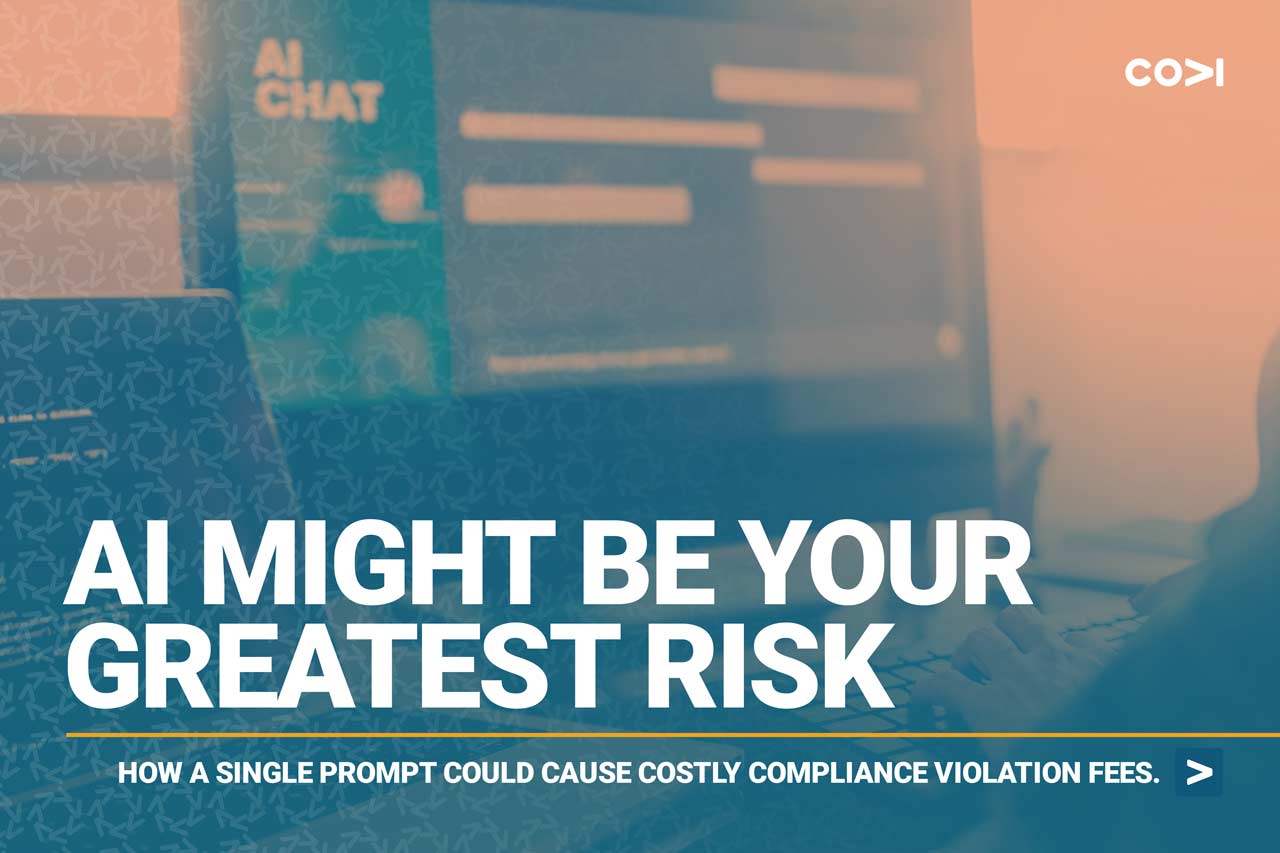
Why Your Favorite AI Tool Might Be Your Greatest Risk
Last month, a client’s employee uploaded their entire customer database to ChatGPT to “help organize it better.” The tool worked beautifully. The compliance violation was a bit uglier.
This isn’t a story about banning AI. It’s about understanding that not all AI tools handle your data the same way, and that distinction matters more than most realize.
The Problem Isn’t AI, It’s Where Your Data Goes
Here’s what catches most organizations off guard: many consumer AI tools treat your prompts as training data. That customer list, source code snippet, or draft contract you pasted in might be permanently woven into the provider’s model, potentially surfacing in responses to other users or sitting in logs accessible to their staff.
The risk compounds when employees don’t realize the difference between “using AI” and “feeding sensitive data to AI.” A question about general marketing strategy is fine. Pasting your Q4 financials to summarize them is a different conversation entirely.
Compliance Doesn’t Care About Convenience
If you handle regulated data (CMMC, GDPR, HIPAA, FINRA, PCI), using unapproved AI tools creates immediate compliance exposure. Regulators expect documented controls over third-party data processing, including formal agreements, data location guarantees, and deletion rights. Consumer AI tools rarely provide these or only at much higher costs.
Beyond regulatory risk, uploading trade secrets or proprietary information to unvetted platforms can legally weaken your confidentiality protections. Courts may view broad disclosure to third parties as undermining the “confidential” status you’re trying to protect.
Shadow AI Creates Blind Spots
When employees adopt AI tools independently, you lose visibility into what data leaves your environment and where it lands. These shadow systems operate outside security monitoring, making investigation nearly impossible when something goes wrong. You can’t delete what you can’t see, and you can’t investigate logs that don’t exist.
Most consumer AI tools don’t offer robust encryption standards, access controls, or audit trails. When a breach occurs or data surfaces inappropriately, you’re left without the forensic capabilities to understand the scope or contain damage.
The Business Case for Getting This Right
Data incidents through AI tools trigger the same consequences as any other breach: regulatory fines, mandatory notifications, lawsuits, and reputational damage that’s often permanent with clients and partners. Several high-profile companies have already implemented blanket bans on generic AI tools following incidents, leading to reactive policy rather than strategic adoption.
There’s also an operational risk that’s harder to quantify: AI hallucinations. When employees trust inaccurate outputs and incorporate them into reports, code, or decisions, the resulting errors can cascade through your operations before anyone realizes the source was flawed.
Enterprise Tools Solve Different Problems
Enterprise-focused AI platforms like Microsoft Copilot provide contractual guarantees about data handling. Your prompts aren’t used for public model training. Data stays within tenant boundaries. Administrative controls integrate with your existing identity management, making governance enforceable rather than aspirational.
These platforms enable centralized policy enforcement (restricting which data types AI can access, limiting repository permissions) and provide usage monitoring that prevents shadow AI adoption. You gain the innovation benefits of AI without sacrificing visibility or control.
Building Your Control Framework
For business operations leaders, start by inventorying where AI is actually being used. Shadow AI adoption is widespread; you need visibility before you can implement policy. Establish clear guidelines about what data can and cannot be shared with AI tools and communicate why these distinctions matter.
For technical operations, implement monitoring that flags data uploads to unapproved external services. Deploy enterprise AI solutions with proper data residency, encryption, and access controls. Create audit processes that review AI interactions involving sensitive information, and build incident response procedures specific to AI-related data exposure.
Both groups should collaborate on user education. Most employees using consumer AI tools have no intent to create risk; they simply don’t understand the data handling differences between platforms. Clear training about what constitutes sensitive data and how different tools treat it will prevent most problems before they start.
The Bottom Line
AI is transforming how we work, and that’s largely positive. But transformation without guardrails creates risk that scales with your data’s sensitivity. The goal isn’t to block innovation; it’s to channel it through tools designed for enterprise use cases where data protection, compliance, and control aren’t afterthoughts.
Your team doesn’t need to stop using AI. They need to use the right AI for the right data. Understanding that distinction isn’t just good security hygiene. It’s what separates organizations that benefit from AI from organizations that become cautionary tales about it.
Need help evaluating your current AI usage or establishing controls appropriate for your industry? Let’s talk about building a framework that enables innovation without expanding your risk surface.
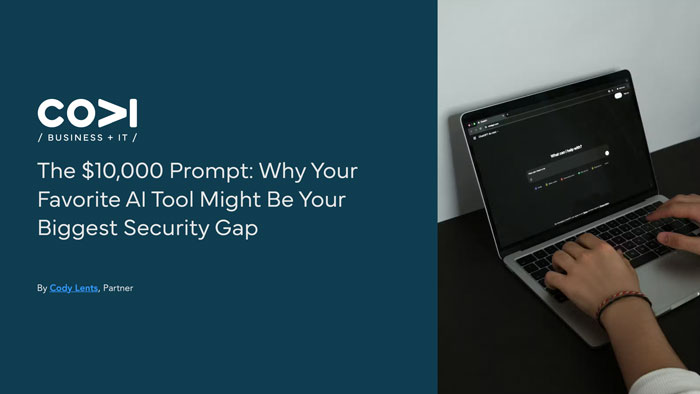
Want the Full Breakdown?
Download our presentation on AI compliance risks and data security protocols. Get actionable frameworks for protecting sensitive information when using AI tools in regulated environments.